Cultivating Prosperity for the Asian Farmer Through Finance
Transforming Agriculture in ASIA with Data-Driven Efficiency
Historically, Asia has had the highest population density relative to land area, leading to the fragmentation of farmland ownership over centuries. Today there are about 100 million small-holder farmers in South East Asia with farm size of 2 hectares or less. This fragmentation has limited farm productivity, preventing many farmers from accumulating capital or accessing higher education. As a result, traditional farming practices persist, often yielding little more than subsistence-level output. In contrast, large farms in Europe, North America, and Australia benefit from economies of scale, driving significantly higher efficiency and productivity.Policymakers recognize the urgent need for agricultural reform, particularly as farmland is lost to urban development. For decades, governments have pursued ownership consolidation to improve efficiency, with varying levels of success. However, fragmented land ownership and restricted access to capital continue to hinder productivity gains.
AGRID: A New Approach to Agricultural Efficiency
AGRID introduces a revolutionary model that achieves economies of scale without requiring land consolidation. Instead of focusing on ownership, AGRID leverages data transparency and precision farming to unlock operational efficiencies that promises to rival or even surpass traditional large-scale farms.AGRID – "Agriculture by Grid" – divides large fields into precisely defined grids, allowing for detailed tracking of soil quality, crop yield history, and other critical factors. This granular approach ensures that every square meter of farmland receives optimized care, improving yields and resource efficiency.
With AGRID’s tools, farmers can:
✅ Optimize Inputs – Use data-driven insights to apply fertilizers, water, and other resources efficiently.
✅ Maximize Productivity – Understand soil conditions and make informed decisions to enhance yield.
✅ Leverage a Shared Economy – Access resources through a community-based broadband network that connects farmers, equipment, and labor efficiently.
The Data-Kubo Network: Powering a Collaborative Farming Ecosystem
AGRID’s Data-Kubo Network establishes a dedicated broadband infrastructure that fosters a shared agricultural economy. Through this network, farmers can:
🔹 Share Equipment & Labor – Coordinate with other farmers to maximize efficiency and reduce costs.
🔹 Access the Best-Priced Inputs – Use collective purchasing power to secure better deals on essential supplies.
🔹 Enhance Connectivity – Leverage real-time data sharing to improve decision-making and productivity.
With AGRID, the future of farming isn’t about who owns the land—it’s about how intelligently it’s managed. By making every square meter transparent and optimizing operations through data, AGRID is redefining the way agriculture achieves scale and efficiency.
Financing - The Most Important Input for Farmers
We recognize that convincing farmers to shift from long-held traditional practices to modern methods will not be easy. Every day, farmers face two pressing challenges: who will buy their crops and how they will finance their operations.We believe that access to financing will be a powerful incentive for small farmers to work with AGRID in modernizing their practices. At the same time, AGRID empowers banks and financial institutions to lend to small farmers—a practice often encouraged by regulators—by providing a structured platform to monitor and protect their loan exposure. Through this system, banks gain a transparent way to assess risks and secure repayments by capturing farmers' receivable cash flows.By making the risks and rewards of small-scale farming more transparent to the banking industry, our goal is to unlock affordable financing for smallholder farmers—the single most crucial input they need to thrive.
Geospatial Awareness of Each Farmer's Land
The first step that we do for our farmers is to create a geospatial survey of their field. Creating a geospatial survey of a farmer's land is crucial for maximizing productivity and minimizing input costs.Soil is every farmer’s most important asset. We use SOOKIT, our own technology that runs on a mobile phone, to create the cadastral perimeter of the field. By walking around the perimeter of the field while using our GPS-enabled technology, the farmer is able to create an accurate map of his field, as well as an understanding of how it relates to the fields of other farmers.Combining this map with GIS information, we can understand elevation and water sources which are critical for crop planning. By leveraging geospatial data, farmers have the foundation to implement precision agriculture techniques, which allow for the targeted application of water, fertilizers, and pesticides.This precision reduces waste, lowers costs, and minimizes environmental impact. Additionally, geospatial surveys help identify areas of the land that may require more attention or are underutilized, enabling farmers to optimize their land use. With these insights, as interpreted by our experts who can guide farmers remotely, farmers can make informed decisions about crop rotation, irrigation planning, and resource allocation, ultimately enhancing yield and sustainability.
Soil and Yield Mapping
Historically, small farm operations in the Philippines have been opaque to anyone outside of the farmer’s household. Farmers were left on their own devices on what, when and how to plant, apply fertilizer, pesticide and schedule the harvest. This made it difficult for formal lenders such as banks to trust the financial management of farmers. Farmers had no choice but rely on local informal lenders and middlemen for financing, who often extracted exploitative terms.By making every small farm operations fully transparent, we are confident that we can make formal lenders such as banks comfortable with the risk and rewards of lending to small farmers, thereby bring more affordable financing to them. Transparency starts with understanding the condition of the soil.
We start by working with the farmer to measure and monitor the quality of every square meter of his field. The variability of soil quality within the field can be significant, with different areas exhibiting distinct characteristics in terms of texture, organic matter content, pH levels, and nutrient availability. Factors such as past land use, crop rotation, irrigation patterns, and natural landscape features can all contribute to this heterogeneity.Monitoring the condition of the soil is crucial for optimizing crop production and ensuring sustainable farming practices. Regular assessments of soil nutrient content—specifically nitrogen (N), phosphorus (P), and potassium (K)—along with moisture levels, enable farmers to tailor their management practices to the specific needs of different field zones.This can involve adjusting fertilizer application rates, improving irrigation efficiency, and implementing targeted soil amendments. By doing so, farmers can enhance plant health, increase yields, and maintain soil fertility over the long term, ultimately supporting both economic viability and environmental stewardship.
Farms in advanced-farming countries such as Australia use sophisticated electronic and optical sensors to constantly monitor soil health. But because those farms have few laborers, they use robots and drones to deploy the sensors. Instead of wholesale copying of practice in those countries, we have developed our own system to capture data on soil condition by putting sensors on farmers’ hands, not on drones. We call this the SOOKIT system.
Our technology goes beyond soil monitoring—it also tracks what grows above the soil. Many crops, such as mangoes, develop beneath dense tree canopies, making it impossible to assess them from above, even with high-resolution drone cameras. To overcome this challenge, we employ innovative techniques to estimate crop yields by flying drones underneath the canopy, capturing oblique images of the growing crops. This approach leverages prosumer drones, which are significantly more cost-effective than industrial models.Using advanced three-dimensional photogrammetry, we process these images post-flight to estimate crop density per unit of planted land. This data is invaluable, enabling farmers to forecast their expected revenue at harvest. The collected insights can then be seamlessly uploaded to our servers via the Data Kubo Network, where they can be shared with contract buyers and financial institutions to facilitate better planning and decision-making.
Electronic Payments and Collections Platform
The COVID-19 pandemic that began in 2020 significantly accelerated the transition from physical cash to electronic payments across Asian economies. However, the agricultural trade ecosystem—where farmers in rural areas sell their crops to traders—remains largely reliant on cash transactions. Transitioning to an electronic payment platform presents immense opportunities to enhance farmer productivity, financial inclusion, and economic stability.To drive this shift, AGRID plans to invest in targeted promotions that incentivize both farmers and traders to adopt AGRID's cashless payment and collection system. This transformation is not just about convenience—it directly addresses a major challenge in agricultural financing.
Direct Disbursement to Suppliers
One key reason banks hesitate to lend to farmers is the uncertainty surrounding loan utilization. Lenders lack assurance that borrowed funds will be used for essential farm inputs rather than personal expenses, such as a family member’s wedding or debt repayment to predatory lenders. AGRID's electronic payment system mitigates this risk by ensuring that loan disbursements go directly to input providers—such as labor suppliers and dealers of fertilizers and seeds—rather than to farmers in unrestricted cash.
Cash-Flow Capture for Lenders
Additionally, banks are further safeguarded through a built-in repayment mechanism. Under this system, lenders are prioritized for repayment from crop sales, effectively functioning as a form of receivables financing. By digitizing the payment ecosystem, farmers who were once deemed too risky can now gain access to affordable credit, fostering financial stability and agricultural growth.
Data Kubo Network
Filipino farmers have been unable to benefit from the support of a large organization, unlike white-collar workers who enjoy that support even though they work from home. Access to internet is slow or unavailable for most farmers. Access to the electric grid is also a challenge for many.To provide the best support for our partner farmers, our agronomists need to receive and interpret actionable data from distant farms, collected by farmers themselves through mobile computing devices that we provide to them. Farmers also need timely and frequent consultations with our managers who work across the country. None of these needs can be met without broadband connectivity.
To meet these needs, we plan to create a private network, called the Data Kubo Network for the benefit of our partner farmers. This network will be a collection of rural cabins, each acting as a data access point but which can also serve as a mini town hall, evenly spread across the countryside so that each of our farmers can travel to one Data Kubo from his farm by walking a distance of no more than one kilometer.Data Kubos will be self-sufficient because it can obtain power through solar panels. Broadband connectivity can be provided by whatever means available such as fiber cables strung along electrical tranmission lines, point-to-point relay transceivers or most commonly, through low earth orbit satellite service such as Elon Musk's Starlink.
The Data Kubo will be the means by which farmers can upload data collected by them, attend live meetings conducted through web conference and interact with fellow farmers.The Data Kubo Network will allow our company to hire the best people in the Philippines or beyond, without being limited to the local pool of talent, which is scarce in rural communities.
The internet has also revolutionized the teaching of new skills and knowledge. E-learning has become the most cost effective way to teach new skills to students around the world.The Data Kubo Network can provide the infrastructure to deliver e-leaning in the form of how-to-videos for our farmers to learn the best practice for their crops as well as how to best use the new tools that we provide to them.Our company plans to invest substantial resources in producing such quality content in Filipino dialects best suited to each partner farmer.
The Team

Renan Paglinawan
CEO & CTO
- AB Economics Honors Program, ADMU
- MBA, Wharton School
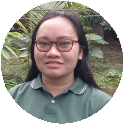
Gianne Barile
CHIEF AGRICULTURIST
- BS Agriculture (Plant Pathology) UP Los Banos
- Licensed Agriculturist

Issa Penales
MARKETING & TRADE
- BA International Studies, DLSU
- Marketing & Business Planning, ADMU-GSB
- Post-Harvest Business Manager

Arvi Ubaldo
BUSINESS DEVELOPMENT
- BA Sociology, UP Diliman
- MSc Innovation and Business, AIM
- Licensed Industrial Security Professional
- Social Entrepreneur

Antonio Fontanilla
AREA AGRICULTURIST
- BS Agriculture (Soil Science) Don Mariano Marcos Memorial University
- Licensed Agriculturist
- Certified Trainer
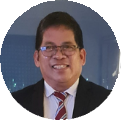
Marcelo Espiritu
SENIOR AGRONOMIST
- BS Agriculture (Agronomy) UP Los Banos
- Licensed Agriculturist
Contact Us
AGRID MANAGEMENT CORP.
100 Roxas Blvd, Suite II-604
Parañaque City 1701
PHILIPPINES
